
Why the Traditional Meeting Room No Longer Reflects How Organizations Make Decisions
Summary
For decades, the boardroom represented the center of business decision-making. Long rectangular tables, fixed seating, and hierarchical layouts were designed for a world where everyone was physically present and communication flowed in one direction.
That world no longer exists.
Today’s organizations operate across offices, homes, job sites, and time zones. Meetings are increasingly hybrid, collaborative, and dynamic. Yet many workplaces continue to rely on meeting room designs that were created for a very different era.
The result is a growing disconnect between how people work and the environments designed to support them.
The future of workplace collaboration isn’t about adding more technology to traditional boardrooms. It’s about rethinking how meeting spaces are designed, experienced, and used.
The Boardroom Was Built for Hierarchy
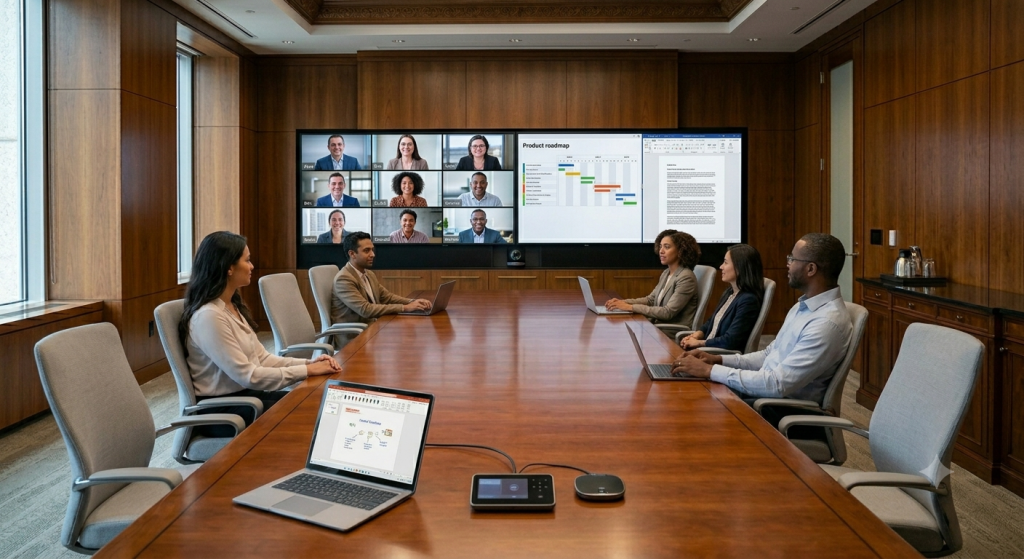
Walk into a traditional boardroom and the message is immediately clear.
A long rectangular table; A defined “head” of the room; Participants facing forward; One display; One focal point; One direction of communication.
Historically, this made sense. Most meetings were in-person. Leadership sat at one end. Presentations flowed from front to back. The room reinforced structure, authority, and control.
But today’s meetings look very different.
Hybrid Work Changed More Than Location
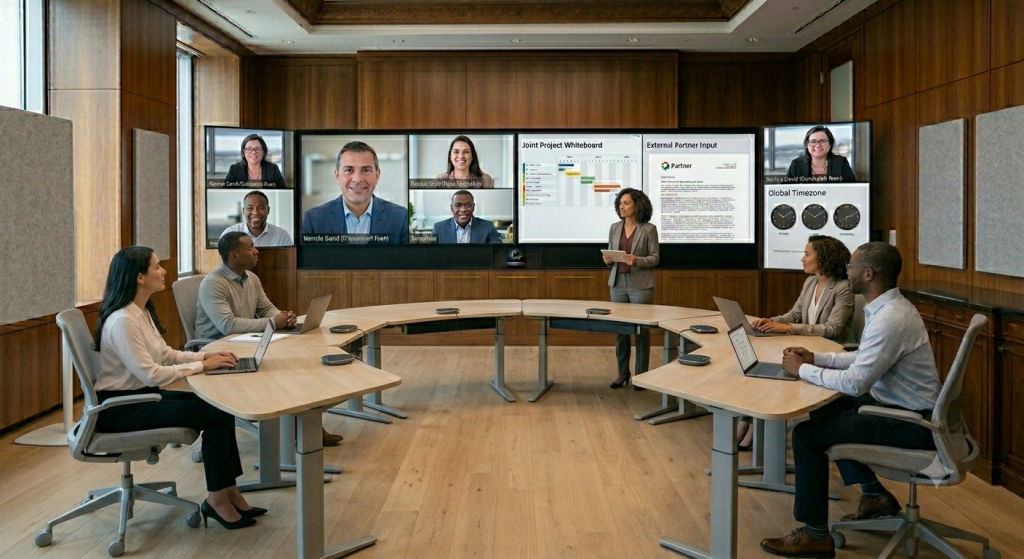
Many organizations view hybrid work as a scheduling challenge. In reality, it changed the nature of collaboration itself.
Today’s meetings often include:
- In-office participants
- Remote participants
- External stakeholders
- Distributed project teams
- Flexible work schedules
People are no longer gathering around a single table to receive information. They’re gathering to share information.
That’s a fundamental shift, and many traditional boardrooms struggle to support it.
The Rectangle Is No Longer Neutral
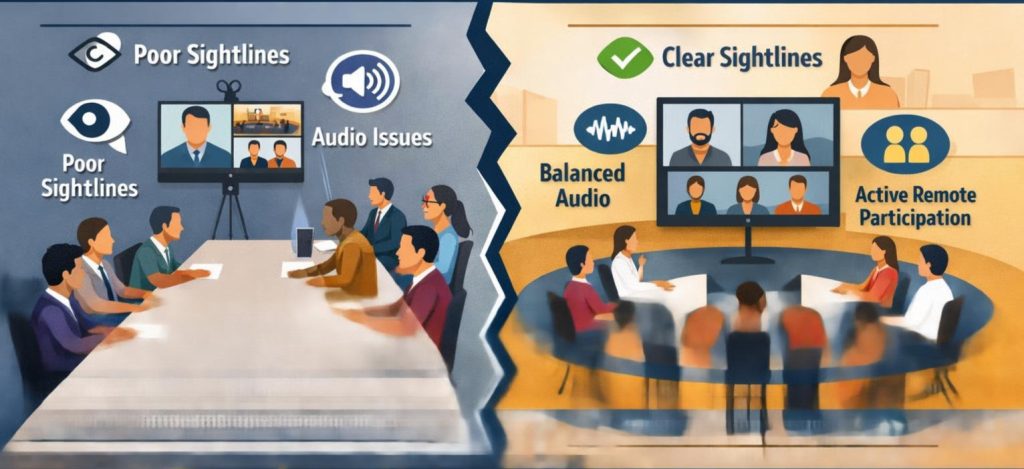
Most organizations assume room shape doesn’t matter. It does. Traditional rectangular layouts often create challenges such as:
- Uneven camera perspectives
- Poor sightlines
- Audio inconsistencies
- Reduced participation from remote attendees
- Unintentional hierarchy
In many cases, the room itself creates barriers to communication. When some participants feel disconnected, unseen, or unheard, collaboration suffers.
The shape of the room influences the quality of the conversation.

Participation Is the New Measure of Success
For years, organizations evaluated meeting rooms based on what they contained.
How large is the display?
What platform does it support?
What technology was installed?
Today, a more important question is emerging: How well does the room support participation?
A successful meeting environment allows everyone to contribute equally regardless of where they are located. The goal is no longer to accommodate technology.
The goal is to enable engagement.
The Invisible Role of Acoustics
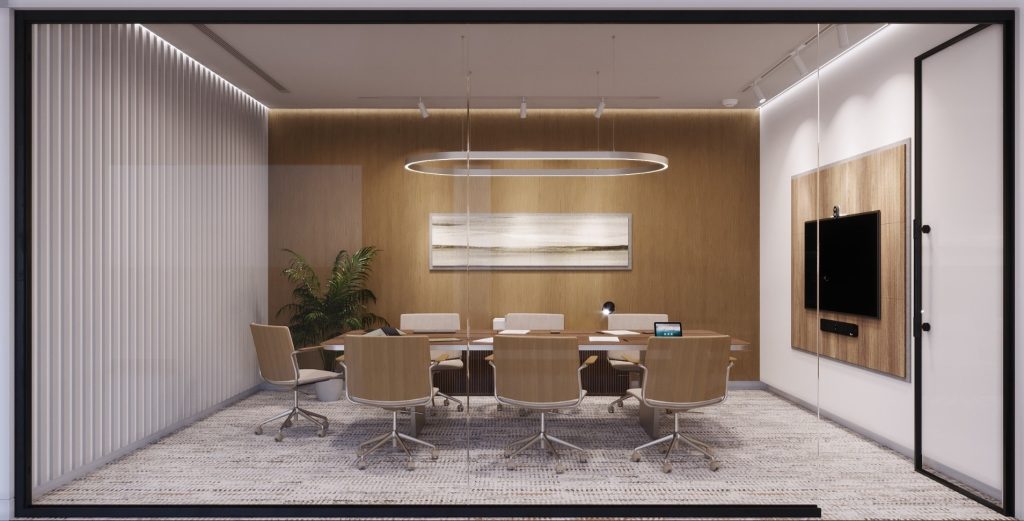
One of the most overlooked elements in workplace collaboration is sound. Many organizations invest heavily in video technology while overlooking the environment in which conversations occur. Yet poor acoustics can undermine even the most sophisticated meeting systems.
Excessive reverberation, reflective surfaces, and poorly balanced spaces can lead to:
- Listener fatigue
- Repeated conversations
- Reduced engagement
- Communication breakdowns
People often notice when a camera isn’t working. They rarely notice acoustics until the meeting becomes difficult to follow.
The most effective collaboration environments consider sound as a core design element, not an afterthought.
Meeting Rooms Should Be Designed Around Conversations
The future workplace requires a different design philosophy.
Instead of asking: “What technology should we install?”
Organizations should ask: “What type of conversations do we need to support?”
That shift changes everything.
It influences:
- Room configuration
- Furniture selection
- Acoustic strategy
- Technology integration
- User experience
The result is a meeting environment designed for collaboration rather than presentation.
The Future Isn’t the Boardroom
This doesn’t mean meeting rooms are disappearing. It means they’re evolving.
The most successful organizations are moving toward spaces that are:
- More flexible
- More inclusive
- More collaborative
- Better suited to hybrid work
The traditional boardroom is no longer the default answer to every meeting challenge.
In many cases, it’s becoming the wrong answer.

The Bottom Line
The boardroom isn’t dying because technology changed. It’s dying because work changed.
Organizations today need spaces that support participation, communication, and collaboration, regardless of where people are located.
The companies that recognize this shift will create workplaces that are more productive, more engaging, and better prepared for the future.
The question isn’t whether the boardroom is evolving.
The question is whether your workplace is evolving with it.
Key Takeaways
- Traditional boardroom layouts were designed for a different style of work.
- Hybrid collaboration requires new approaches to room design and participation.
- Meeting room performance depends on more than technology.
- Acoustics, room geometry, and user experience all influence outcomes.
- Organizations that redesign for collaboration gain a competitive advantage.
Frequently Asked Questions
Are traditional boardrooms becoming obsolete?
Not entirely. However, many organizations are rethinking how boardrooms are designed and used to better support hybrid collaboration and flexible work models.
What is the biggest challenge facing traditional meeting rooms?
Many were designed for in-person communication and struggle to support equal participation between in-room and remote attendees.
How do acoustics affect collaboration?
Acoustics influence speech clarity, engagement, meeting fatigue, and overall communication effectiveness. Poor acoustic performance can negatively impact every meeting.
What should organizations prioritize when designing new meeting spaces?
Organizations should focus on communication outcomes, participant experience, acoustics, room layout, and technology integration from the earliest planning stages.
Can existing boardrooms be improved?
Yes. Many organizations can significantly improve collaboration performance through strategic updates to room layout, acoustics, and meeting technology.
Great Conversations Need Better Spaces
The most effective meeting environments aren’t defined by the furniture they contain or the technology they showcase.
They’re defined by how well they bring people together.
Rova Unify helps organizations create meeting environments that combine technology, acoustics, and workplace strategy to support better communication, stronger collaboration, and improved business outcomes.
The future of work isn’t about where people sit.
It’s about how people connect.