
Summary
- Audio quality is the foundation of effective video collaboration
- Even advanced systems depend on the room environment
- Poor acoustics lead to disengagement, fatigue, and reduced productivity
- Simple acoustic improvements can dramatically enhance performance
- An integrated approach ensures collaboration tools deliver their full value
When organizations invest in video collaboration, the focus is often on what’s most visible: high-definition cameras, sleek displays, and all-in-one video bars. Solutions like the Poly Studio X series, Logitech Rally Bar, or Jabra PanaCast 50 are designed to deliver exceptional video and audio performance in a streamlined form factor.
But there’s a less visible factor that often determines whether those investments succeed or fail: room acoustics.
You can deploy best-in-class technology, but if participants can’t hear clearly, if voices echo, overlap, or fade, then the meeting experience breaks down. Sound quality is foundational to effective collaboration in hybrid work environments, where remote participants rely heavily on audio clarity,
A 2025 industry report highlights that audio distortions are cited in 78% of hybrid meeting complaints, making it one of the most significant drivers of poor meeting experiences in enterprise environments, reinforcing that audio, not video, is often the limiting factor in collaboration success.
Why Audio Quality Defines the Meeting Experience
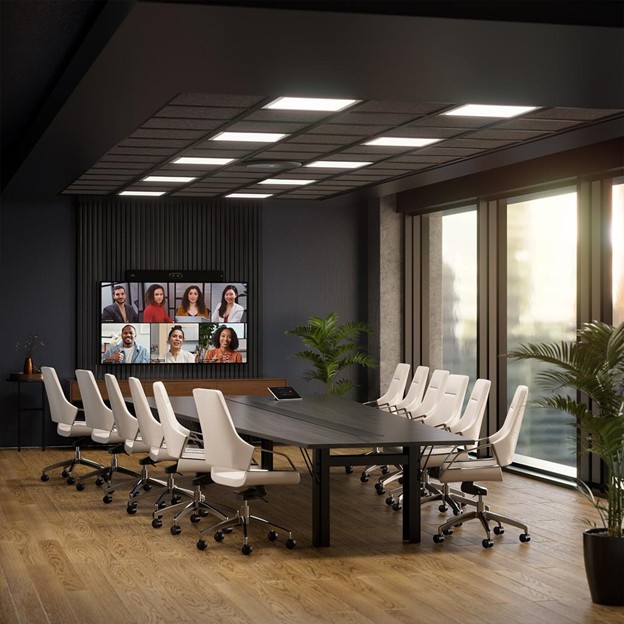
There’s a simple truth in collaboration: people will tolerate imperfect video, but they won’t tolerate poor audio.
When acoustics are neglected, common issues emerge:
- Echo and reverberation from glass walls and hard surfaces
- Inconsistent voice pickup, especially in larger rooms
- Background noise interference
- Listener fatigue, as participants strain to follow conversations
Research from EPOS highlights that poor audio causes our brains to work 35% harder to interpret Information, making it harder for participants to process information and stay engaged.
These challenges don’t just impact sound; they affect engagement, comprehension, and decision-making.
Why Technology Alone Isn’t Enough

Modern video conferencing systems are more advanced than ever. Devices such as the Logitech Rally Bar or Poly Studio X70 include:
- Beamforming microphones that track active speakers
- AI-driven noise suppression
- Automatic gain control and voice enhancement
- Intelligent framing and camera switching
These innovations significantly improve performance, but they can’t fully compensate for poor acoustics.
For example, beamforming microphones can isolate voices, but in a highly reflective room, sound still bounces unpredictably. Even advanced DSP (digital signal processing) has limits when the environment itself is working against clarity.
According to AVIXA, room acoustics are one of the top factors influencing perceived audio quality in AV environments, often outweighing equipment specifications alone. In other words: technology enhances sound and acoustics define it.
Common Acoustic Challenges in Meeting Rooms

Many modern office designs unintentionally work against good acoustics.
Typical issues include:
- Glass walls and hard surfaces that amplify echo
- Large, open rooms that disperse sound unevenly
- Minimal soft materials to absorb sound
- Microphones positioned too far from participants
The good news: these challenges are often straightforward to address.
Effective improvements may include:
- Acoustic wall panels or ceiling baffles
- Soft furnishings like carpet or upholstered seating
- Optimized microphone placement (e.g., table or ceiling arrays)
- Adjusted room layouts to reduce sound travel distance
Even small adjustments can significantly improve how systems perform in real-world environments.
Designing for Hybrid Equity

Acoustics play a critical role in something organizations increasingly prioritize: hybrid equity.
Remote participants depend entirely on audio clarity. If voices are unclear, inconsistent, or distorted, they’re effectively excluded from the conversation. Poor meeting experiences disproportionately affect remote participants, reducing engagement and participation.
Designing for hybrid equity means ensuring:
- Every voice is heard clearly
- Audio levels are consistent
- Conversations feel natural and inclusive
This requires aligning room design, acoustics, and collaboration technology.
A More Holistic Approach to Collaboration Spaces
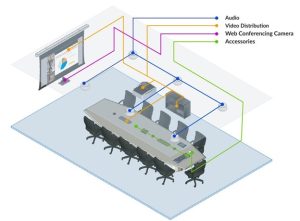
Meeting rooms today must be designed as complete systems, not collections of devices.
That includes:
- Cameras, microphones, and platforms
- Room layout and furniture
- Acoustic performance
- User workflows and experience
Acoustics may not always be the first consideration when selecting solutions, but they play a critical role in how those solutions perform.
Rova Unify: Bringing Technology and Environment Together
At Rova Unify, the focus isn’t just on deploying best-in-class platforms; it’s on ensuring those technologies perform effectively in real-world environments.
That means understanding:
- How a room is built and used
- Where sound travels and where it breaks down
- How people interact within the space
By working closely with clients and trusted partners, where needed, Rova Unify takes a holistic, consultative approach, aligning technology, environment, and user experience to deliver meaningful outcomes.
Key Takeaways
- You can’t fix bad acoustics with good technology alone
- Hybrid meeting success depends on clear, consistent audio
- Room design and AV technology must work together
- Organizations should evaluate acoustics before or alongside AV investments
FAQ: Meeting Room Acoustics & Video Collaboration
Why are meeting room acoustics important for video conferencing?
Because audio clarity directly impacts understanding, engagement, and participation, especially for remote attendees.
Can modern video conferencing systems fix poor acoustics?
They can improve audio, but they cannot fully overcome issues like echo and reverberation caused by the room itself.
What are the most common acoustic problems in meeting rooms?
Hard surfaces, glass walls, large open spaces, and poor microphone placement.
How can I improve meeting room acoustics without major renovation?
Add acoustic panels, soft furnishings, and optimize microphone placement.
Do all meeting rooms need acoustic treatment?
Not always, but most benefit from at least basic acoustic considerations, especially in hybrid environments.
Better Meetings Start Before the Technology
The future of collaboration isn’t just about better cameras or smarter features. It’s about creating environments where technology can truly perform.
Because ultimately, the success of a meeting isn’t defined by video quality; it’s defined by whether people can hear, understand, and engage with each other effortlessly.
Organizations that recognize the role of acoustics will unlock more value from their collaboration investments and create better experiences for everyone involved.
And those that don’t may find that even the best technology can only go so far.