
As we kick off 2026, one fact is clear: collaboration has permanently changed. The rise of distributed teams, hybrid work models, and global customers has made video collaboration not just a convenience but essential to how business gets done. Gone are the days when video meetings were just a part of remote work; today they’re central to team productivity, customer engagement, and organizational culture.
According to recent workplace collaboration data, video conferencing use has surged since 2020, and 75% of organizations worldwide now use video conferencing for business communication, cementing its role as a core tool for connecting people across geographies and time zones.
Let’s explore the key trends defining video collaboration in 2026 and what they mean for workers, teams, and organizations seeking truly seamless engagement.

- AI Is No Longer Optional
Artificial intelligence continues to shift video collaboration from functional communication to intelligent interaction. AI-powered features now go far beyond background blur or noise suppression:
- Automated meeting summaries and action item extraction
- Real-time transcription and closed captions
- Smart scheduling and participant engagement analytics
AI adoption in collaboration and hybrid work environments remains strong, with most companies already integrating AI tools and trending toward deeper AI usage as remote work evolves. Remote teams continue to adopt AI-powered collaboration tools to automate workflows and communication tasks, making meetings more efficient and actionable.
Moreover, video platforms that can detect engagement levels, participation patterns, and even sentiment are becoming a core part of enterprise workflows. This elevates video from a passive communication channel to a data-rich environment that guides decision-making.
- Immersive Collaboration Is Evolving
Traditional video tiles, boxes of faces on a screen, are giving way to immersive experiences that mimic in-person interaction.
Tools incorporating Extended Reality (XR), including AR, VR, and mixed reality, are creating virtual spaces where teams can interact, brainstorm, and visualize data together.
Think virtual meeting rooms where participants feel physically present, shared 3D whiteboards, and spatial audio that mirrors real conversation dynamics. These technologies are particularly compelling for design-centric industries such as architecture, engineering, and consulting, but their influence is spreading across sectors.
This shift speaks to a broader need in modern work: presence. People want collaboration that feels natural, not artificial, a challenge that XR is uniquely positioned to solve.
- Hybrid Work Demands Equity Between Remote and In-Person Participants
With hybrid work firmly mainstream, video collaboration tools are evolving to address inclusion, not just connectivity.
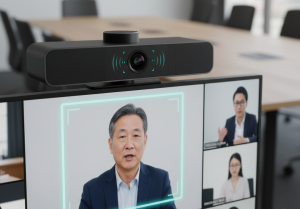
Remote participants should never feel like second-class attendees. Smart camera systems, AI-driven speaker tracking, and synchronized multi-device experiences are now essential for equitable participation.
For example, intelligent framing systems ensure remote attendees can see who’s speaking in a room, while spatial audio ensures voices sound as though they’re coming from distinct sources, just like in person. It’s no longer enough for everyone to just be present; they must feel present.
- Intelligent Sound Systems and Multi-Camera Meeting Rooms

As organizations standardize hybrid collaboration, meeting rooms are rapidly evolving toward all-in-one, intelligent audio-visual systems that reduce complexity while delivering a consistent, high-quality experience for every call. Instead of assembling separate cameras, microphones, and speakers, today’s solutions integrate these components into a single, purpose-built device.
Features such as automatic speaker tracking, intelligent framing, advanced noise suppression, and plug-and-play deployment make it easier for IT teams to scale collaboration spaces efficiently and reliably. Platforms like Poly Studio X and Logitech Rally Bar exemplify this shift, providing professional-grade video and audio performance while simplifying room design and support. When deployed as part of a broader, thoughtfully planned collaboration strategy, these systems help organizations create meeting environments that feel intuitive for users and manageable for IT, an increasingly important expectation as video collaboration remains the norm.
- Asynchronous Collaboration Is Rising
While live video remains important, more organizations are embracing asynchronous collaboration to reduce meeting overload and empower focused work.
As companies operate across global time zones and complex schedules, real-time interaction isn’t always feasible or productive. Recorded video updates, interactive message playback, and time-independent discussion threads allow team members to contribute on their own schedule, without losing context or momentum.
This trend reinforces a broader shift: collaboration isn’t only about synchronous meetings anymore; it’s about enabling meaningful work wherever, and whenever, people contribute.
- Security, Integration, and User Experience Are Table Stakes

With so much critical information shared over video, security is non-negotiable. Modern video collaboration systems now include:
- End-to-end encryption
- Multi-factor authentication
- Real-time threat detection and compliance safeguards
Integrated workflows are also a priority as teams expect video tools to work seamlessly with calendars, file sharing, task management, and CRMs. This integration reduces “tool fatigue” and keeps collaboration centralized rather than scattered across fragmented systems.
Finally, user experience matters. People want intuitive, reliable tools that just work – fast, clear, and predictable. A smoother interface directly translates to better engagement, particularly when high-stakes customer interactions are involved.
- Workers Expect More From Collaboration Tools
As collaboration technology evolves, so do worker expectations:
- Employees believe remote/hybrid tools need improvement, and most want better support for flexible work without friction.
- According to workplace collaboration research, 76% of the global workforce now relies on video conferencing and other collaboration tools as part of their daily work routines
This underscores a simple reality: the tools people use shape not only productivity but also job satisfaction and human connection.
Rova Unify: Collaboration That Goes Beyond the Platform
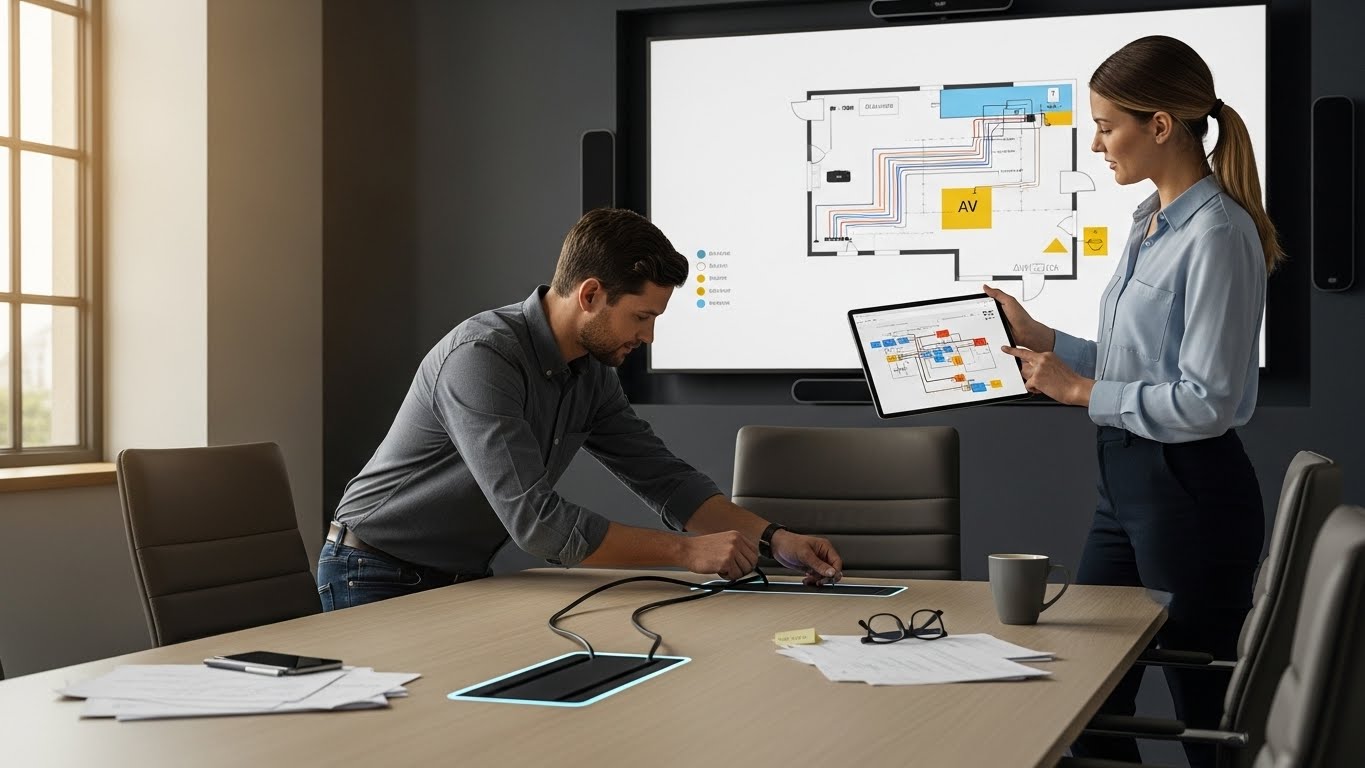
As video collaboration trends accelerate, Rova Unify isn’t just another platform in the market.
What sets us apart is how we implement collaboration for our customers.
We pair cutting-edge technology with personalized engagement, ensuring our solutions not only integrate seamlessly with your environment, but actually improve how teams and customers connect. Our approach blends strategic planning, customized onboarding, and ongoing support to make collaboration tools feel like a natural extension of how you work.